
New landscape planning strategy
17 July 2025
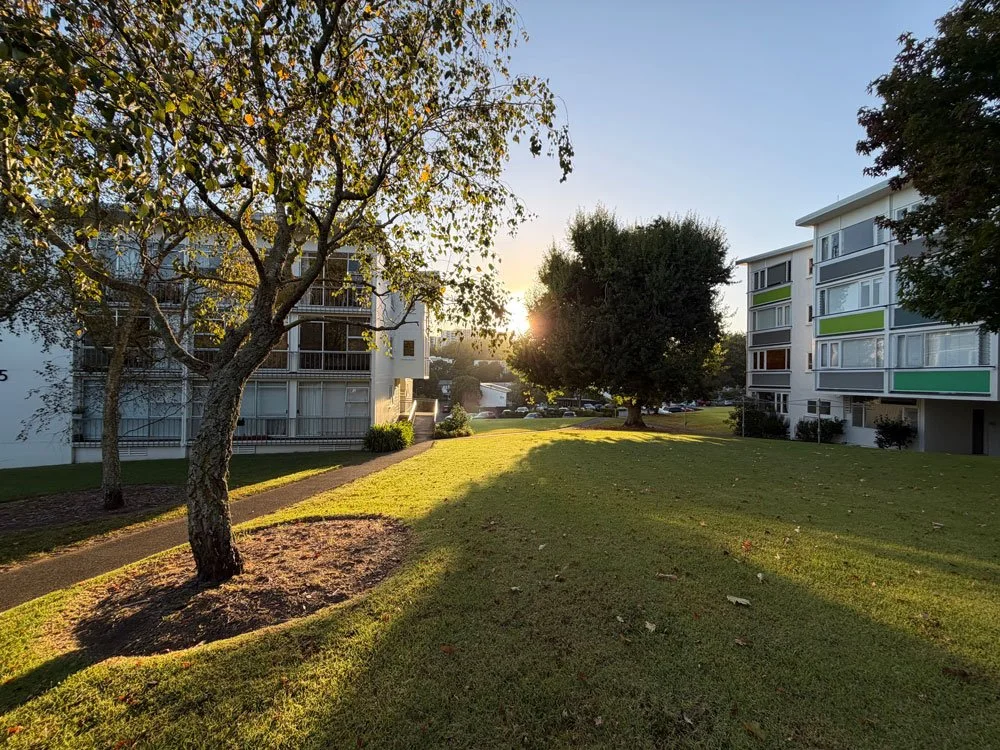
The Body Corporate is working with landscape architecture firm Reset Urban Design, led by Garth Falconer, to develop a landscape masterplan that updates Freemans Park’s planting and tree strategy while respecting its original Harry Turbott mid-century design.
The masterplan will guide future grounds decisions, improve efficiency, reduce costs, and protect the park-like character of the environment; it includes a heritage-based plant palette, a five-phase (2025-2028) rollout, and a tree plan informed by Arborlab.
Owners were invited to review the proposal, attend meetings, and provide feedback; their submissions highlighted themes such as cost control, biodiversity, edible planting, flood resilience, care for trees, and differing views on agapanthus.
In response, it was decided to proceed with the Stage 1 planting, with some adjustments; tree work to follow Arborlab’s recommendations; herb gardens and fruit trees will be expanded.
Later phases remain open for further consultation and refinement.
The Body Corporate is working with the landscape architecture firm Reset Urban Design to develop a landscape masterplan for Freemans Park. In essence, this document will provide an updated planting and tree strategy for our grounds.
Reset Urban Design’s director, Garth Falconer, has provided expert advice on this proposed masterplan. He is a highly respected Auckland-based landscape architect, and has published a book on Harry Turbott – the person who originally designed our grounds 60 years ago in its mid-century modernist style.
The masterplan will be a living document that guides future grounds decision-making, while respecting its heritage design. It will make managing the grounds more efficient, reduce our annual grounds costs, and protect what’s unique and special about our park-like local environment.
The proposed masterplan includes:
A plant colour palette drawn from the original Harry Turbott plan.
Guidelines for the treatment of street and building edges.
A five-phase implementation timeline, to be undertaken from 2025 to 2028.
A tree maintenance plan, which has been informed by the research and work of our arboreal experts, Arborlab.
A useful summary of the proposed masterplan has been prepared to help owners understand the document. We encourage you to read the summary. Or feel free read the full document.
The Committee has organised an in-person meeting with Garth Falconer to answer questions. Alternatively, you are welcome to attend an online meeting.
Please email your feedback on the proposed landscape masterplan by 4pm on Friday 8 August 2025. The Committee will then review the feedback before deciding the next steps in the process.
Update: 31 August 2025
Around 10-20% of owners made submissions. The committee has carefully considered all feedback. We acknowledge that views differ.
From the feedback we received, some clear themes emerged:
Managing costs is important.
Many people value the open, park-like grounds.
Some want more native planting to support biodiversity.
Some want more edible planting, like herbs and fruit trees.
There were diverse views about agapanthus.
Building resilience to flooding matters.
There are “pain points” where changes affect some units more than others.
People care about our trees and fruit trees and want to understand what is happening and why.
What happens next:
Stage 1: We have made some changes in response to feedback and will proceed with planting this season.
Immediate focus: Tidying and rationalising the grounds, keeping maintenance manageable, and replacing uncoordinated plantings on common property with sustainable, hardy, and easily managed species.
Agapanthus: No new agapanthus will be planted, though some existing plants are being relocated. We will continue to manage it appropriately for our site.
Trees: Work will follow Arborlab’s professional recommendations. Owners are usually notified 1-2 weeks before work begins. No further scheduled tree work is planned until next winter.
Herb gardens and fruit trees: We are exploring ways to increase the number of herb gardens. We are also caring for fruit trees – pruning, fertilising and replacing them like-for-like where needed – reflecting that many people see these as important.
Later phases: No decisions have been made. We have time to consider these in detail and will continue to listen and adapt as we go.